Luxury Smart Home Features Worth Evaluating Before You Buy on Cape Cod
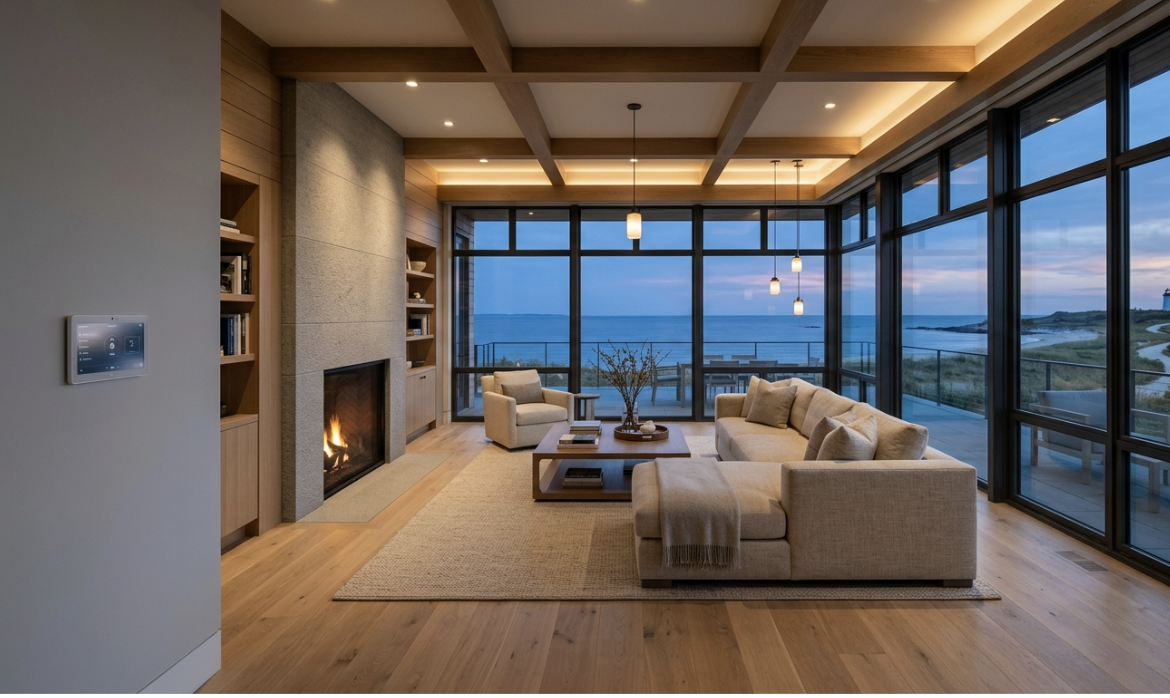
There's a particular kind of buyer who walks through a high-end property on the Cape, takes in the water views, the custom millwork, the chef's kitchen, and then asks, quietly but seriously: "What's running behind the walls?"
That question used to be rare. Now it comes up in almost every serious showing.
Technology has become part of the bones of a well-built home. Not as a novelty, but as infrastructure. And on Cape Cod and along Southern Coastal Massachusetts, where many luxury properties serve as second homes, seasonal retreats, or year-round residences in genuinely demanding coastal environments, the systems a home runs on matter as much as how it looks.
This isn't a list of gadgets. It's a framework for evaluating what's actually worth your attention before you sign.
Why Smart Home Technology Matters More in Coastal Markets
Before getting into specific features, it's worth understanding why this conversation is especially relevant here.
Cape properties face conditions that most inland homes don't. Salt air accelerates corrosion. Seasonal vacancy creates security and maintenance exposure. Nor'easters push wind and water into places you don't anticipate. Energy costs in coastal Massachusetts run higher than most of the country.
A thoughtfully integrated smart home system doesn't just add convenience, it actively addresses those conditions. Remote monitoring, automated climate control, and high-performance security aren't luxury add-ons in this context. They're practical responses to how these properties are actually used.
Home Automation: The Difference Between Integration and Installation
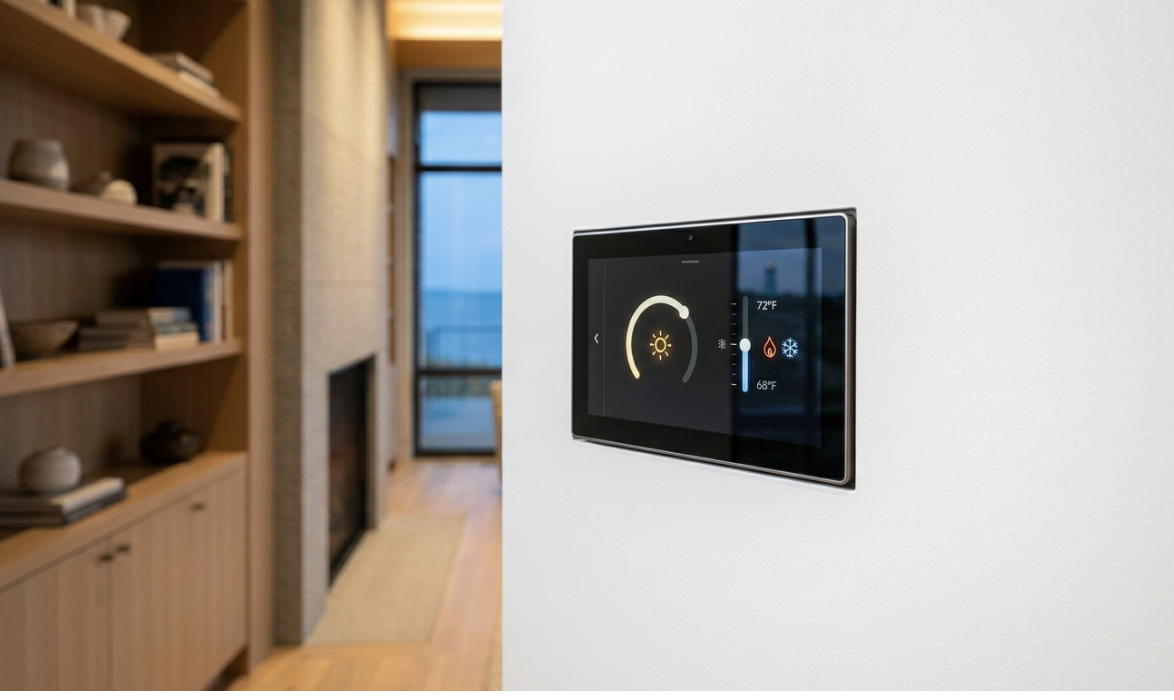
The most common mistake buyers make when evaluating smart home features is confusing installation with integration.
A home can have a Sonos sound system, a Lutron lighting system, a Nest thermostat, and a Ring doorbell, and still require four separate apps, three different remotes, and someone's 14-year-old to operate it reliably.
True integration means all of those systems speak to each other through a single, coherent platform. In the luxury market, the names that come up most often are Control4, Savant, and Crestron, platforms designed specifically for whole-home automation at a high level of sophistication and reliability.
What to look for:
A single interface that controls lighting, climate, audio, video, security, and access
Scenes and schedules that work automatically, not just on command
A system that was professionally designed and installed, not retrofitted piecemeal
Documentation and ongoing support from the installing dealer
The quality of the installation matters as much as the platform itself. Ask who installed the system, when it was last serviced, and whether a dealer relationship is still active. A well-designed Control4 system with no support contact is a liability, not an asset.
Security Systems Built for Properties That Sit Empty
For second-home owners on Cape Cod, security isn't just about deterrence. It's about knowing, with real confidence, what's happening at a property you may not visit for weeks.
Consumer-grade systems have their place. But at the luxury level, the conversation shifts.
What genuinely high-end residential security looks like:
Professional monitoring with redundancy. Not just an alarm that calls your phone, a system connected to a central monitoring station that operates independently if your internet goes down or if someone cuts a line.
Distributed cameras with intelligent detection. Not a grid of cameras recording everything, but a thoughtful layout with motion-triggered alerts, facial recognition capability, and clean integration into the home's broader automation platform.
Smart access control. Keypad entry, biometric access, or app-based locks that let you grant and revoke access remotely. For caretakers, housekeepers, or contractors visiting an unoccupied property, this is genuinely useful, not just convenient.
Water and environmental sensors. On a coastal property, a slow pipe leak during an unoccupied January can cause more damage than any break-in. Leak detectors, freeze sensors, and humidity monitors tied to the home automation system give remote owners a level of oversight that matters at this level of investment.
Energy Systems: High Performance and Lower Operating Costs
Luxury and efficiency used to feel like opposing ideas. They no longer are.
The most forward-thinking high-end homes in Southern Coastal Massachusetts are built or retrofitted with energy systems that reduce operating costs significantly over time, and increasingly, buyers are asking about them.
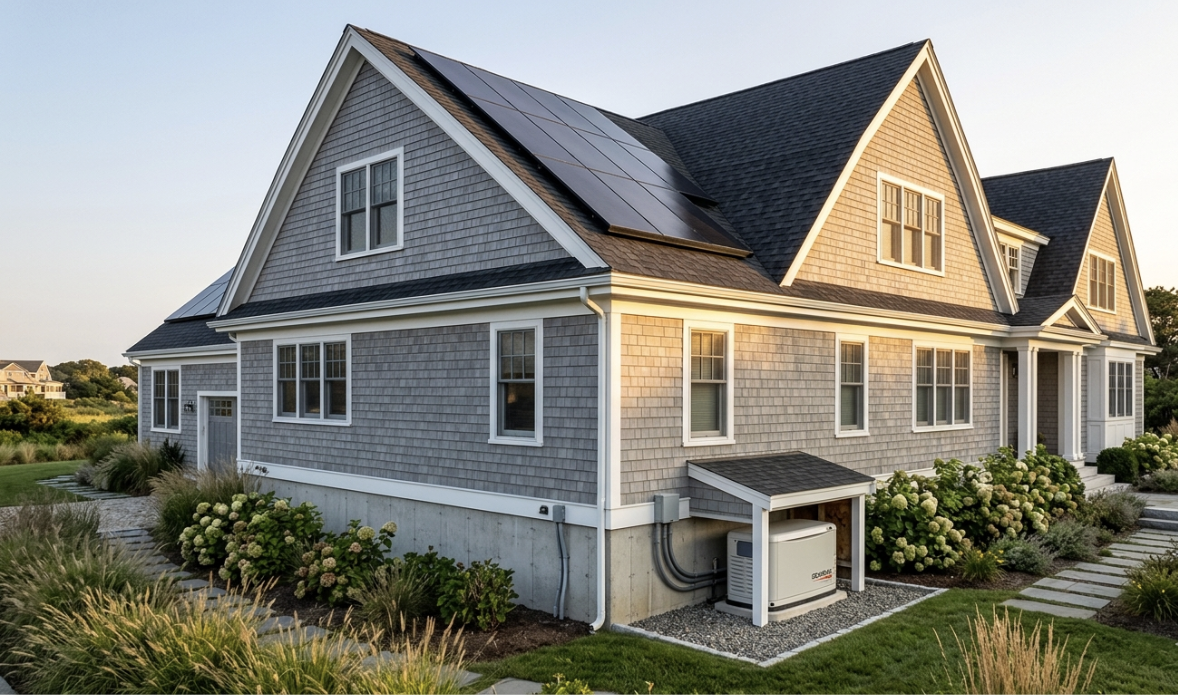
Whole-home generators. On the Cape, power outages are not hypothetical. A properly sized standby generator, integrated into the home's electrical system, not just plugged in, is a baseline expectation for properties at this level.
Solar with battery storage. Solar has matured considerably as a residential technology. Paired with battery storage systems like Tesla Powerwall or Enphase, it provides energy independence and significant long-term savings. For buyers who plan to hold a property for ten or more years, the economics are real.
Smart HVAC and zoning. High-performance heating and cooling systems, particularly multi-zone heat pumps, allow precise climate management across different areas of the home. For a large property with rooms used at different times and frequencies, the ability to condition only what you're using is meaningful both for comfort and cost.
Insulation and building envelope performance. This isn't automation, but it belongs in this conversation. A home with exceptional smart systems and poor building envelope performance is fighting itself. When evaluating a luxury property, understanding how it was built, insulation type, window specifications, air sealing, tells you as much about long-term performance as any technology package.
Networking Infrastructure: The Foundation Everything Else Depends On
This is the area buyers most consistently overlook, and it may be the most important.
Every smart home feature described above depends on reliable, high-performance networking. A beautiful Control4 system connected to an undersized router and spotty internet coverage is a frustration, not a feature.
What a well-built smart home should have:
Structured wiring - Cat6 or better, run to every room during construction or renovation, not just where it seemed necessary at the time
Enterprise-grade Wi-Fi with full coverage including garages, outbuildings, and exterior spaces
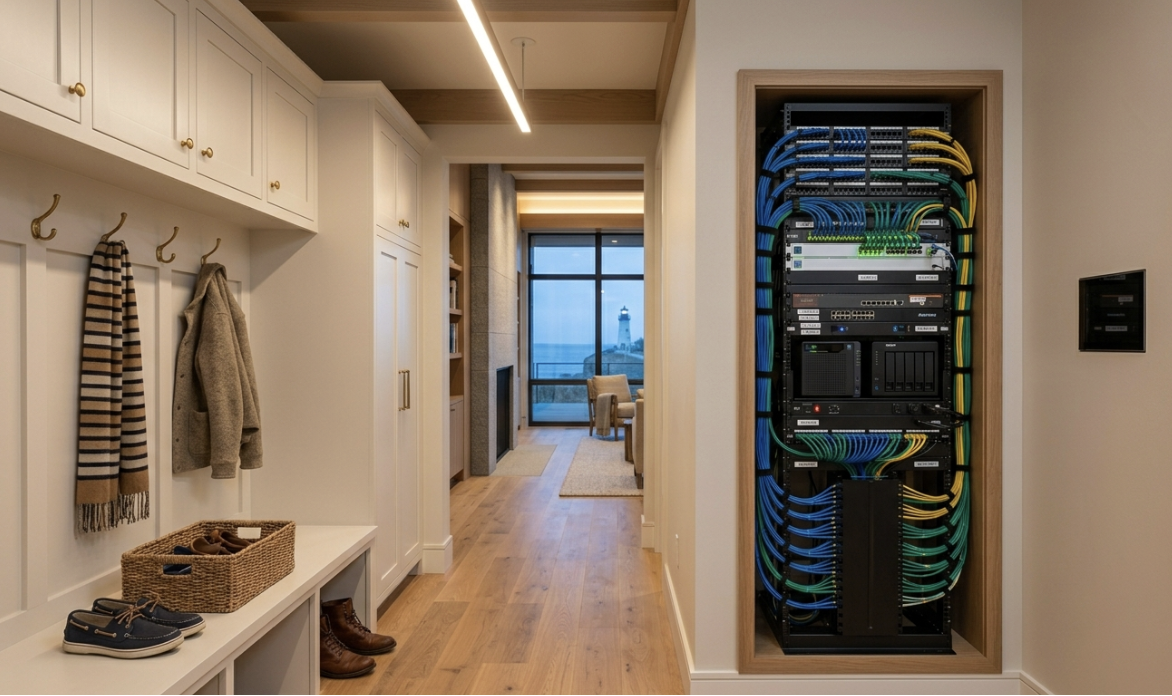
A dedicated network rack - clean, labeled, and professionally installed, typically in a utility room or dedicated closet
Redundant internet - for properties where reliable connectivity is critical, a secondary ISP or cellular backup keeps everything functioning during outages
When you tour a luxury home, ask to see the network closet. It tells you more about how seriously the technology infrastructure was treated than almost anything else.
Questions to Ask Before You Close
If you're actively evaluating a luxury property and want to assess its smart home infrastructure honestly, here are the questions worth raising:
What platform is the home automation system built on, and who installed it?
Is there an active dealer or support relationship, and what does it cost annually?
When was the security system last serviced, and what does monitoring cost monthly?
Is there a whole-home generator, and when was it last load-tested?
What is the home's current energy usage, and are there solar or battery systems in place?
What is the network infrastructure: structured wiring, router hardware, ISP?
Is there documentation for the systems: manuals, login credentials, installation records?
A seller or listing agent who can answer these questions clearly is telling you something about how the home was managed. One who can't is telling you something too.
A Note on New Construction vs. Retrofitting
If you're evaluating new construction, or working with a builder on a custom home, this is the moment to make these decisions intentionally.
Running conduit, pulling wire, and designing a network infrastructure during the framing stage costs a fraction of what it costs to retrofit after drywall. The same is true for generator connections, solar rough-ins, and security camera wiring.
For buyers building custom on the Cape or along the South Shore, the conversation with your builder about technology infrastructure should happen before the foundation is poured, not during the final walkthrough.
The Bottom Line
Smart home technology in the luxury market isn't about impressing guests or keeping up with what's new. It's about building a home that functions reliably, costs less to operate over time, and gives you real confidence whether you're in it every day or checking in from somewhere else entirely.
On Cape Cod, where the environment is demanding and the investment is significant, those aren't small considerations.
The right systems, properly installed and genuinely integrated, make a high-end property perform the way it should, quietly, consistently, and for a long time.
Thinking about buying or building on the Cape?
LaBarge Real Estate works with buyers who want to understand what they're actually purchasing, not just how it looks on the day of the showing. Reach out to start a conversation.